Showing posts with label great egret. Show all posts

Friday, 28 August 2015

Birds of the Reed Beds start to Stir

After several weeks of almost total inactivity at #RSPB Ham Wall, some signs of life yesterday! The Great Egrets were making occasional flights. This one ended up by landing in the reeds right in front of me. Here is a sequence of three shots as it approaches.


I just love it when I get lucky like this, especially if, as yesterday, I am waiting for hours and hours for anything to happen. It is a shame that you cannot see the originals of these shots. My new birds-in-flight combination of the Canon 400mm f4 DO II lens and the Canon 7D MkII camera is proving to be a killer combo! I always use it with the Canon 1.4x teleconverter and it is still light enough to carry around all day even if I am walking miles.

Having replaced the original version of the 400mm f4 DO with the recently-released MkII I am mightily impressed by the increased sharpness that I am getting. I read all the bad comments about the original lens but nevertheless generally seemed to get good results with it. I used it on the original 7D for about four years. The new lens however is a class above the original.

Of course, it takes time to come to a conclusion like that, especially with birds in flight. By the very nature of the activity quite a lot of the photos come out blurred to one degree or another, even with the best technology to help you. So you have to look at the good shots you eventually get and compare them with what you used to regard as good with the previous equipment. When I do that I am seeing levels of sharpness that I do not think I have ever really achieved before.

Sadly, even small improvements in quality come at very high financial cost. The Canon 400mm f4 II is not cheap, but I could not be without it. It was impossible for me to continue with the old one knowing that there was a better one out there. I just could not rest easy. Here is a nice sharp Grey Heron.


These shots are all the more amazing if you know what chaos reigns behind the camera when a bird suddenly shows after hours of nothing happening. Suddenly I am trying to do everything at once. Even getting the bird in the viewfinder is not easy. I just press the button and the technology then does the rest, focus and exposure. I am often amazed to see what it has managed to come up with!

Whilst we are talking Herons, here is an earlier shot taken in the winter whilst this one was fishing.


The reeds are their winter colour. I won't be long now before they start to turn from Summer green. Here is a distant shot of a Great Egret doing a bit of fishing too.


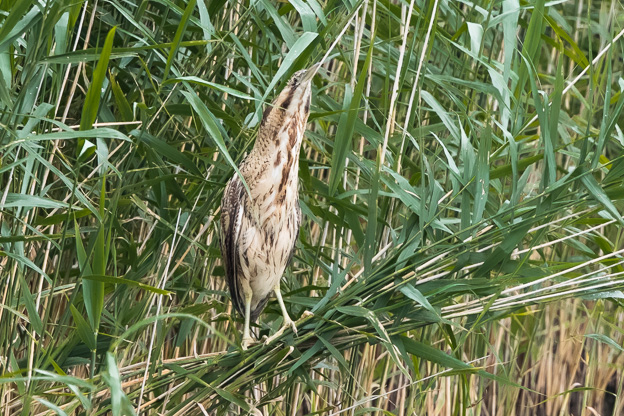
The other bird that put in occasional appearance yesterday was the Bittern.


At this time of year they just pop up out of the reeds, fly for about twenty seconds, then drop out of sight for the rest of the day. It is so frustrating as they almost always take me by complete surprise and I cannot even get the camera on to them. The one above though made the mistake of making a slightly longer flight and passing right in front of the hide. Even I had a chance.

Another bird which is usually easier to photograph is the Mute Swan. Trouble is, they almost always look pretty much the same floating along, so I was quite grateful to be able to snap this more interesting pose.


Obviously having a good stretch prior to doing something energetic, like paddling serenely along.

Finally a nice shot of Glastonbury Tor to remind us all that Ham Wall is in Somerset!


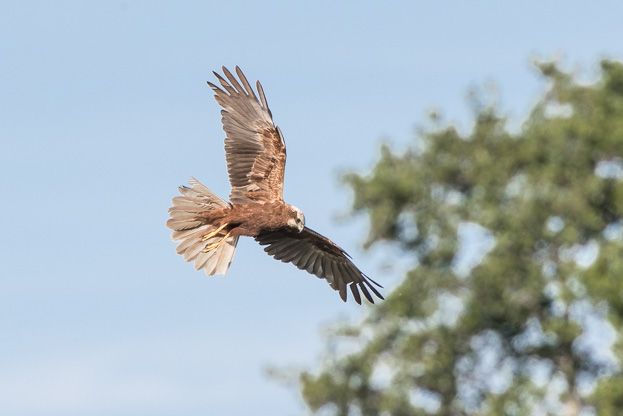
Actually, not quite the last shot as I would like you to know that I also got several distant Marsh Harrier sightings during the day.


Please do visit my website at www.johncrabb.co.uk and perhaps "Like" my Facebook page at www.facebook.com/johncrabbwildlifeimages 

Thanks!!


Thursday, 16 July 2015

More from the marsh!

I had always thought of summer as the quiet period for bird watching and photography. Not this year though!


Having spent much of my last Blog entry moaning about missing the best of the bird action, I happened to be in the right place when this Bittern came out of the edge of the reed bed to have a look at the world. I think it may be a young one. As I watched, it looked like it might be about to launch into the air, but each time thought better of it and crept back into the cover of the reeds. It did do a bit of posing though, including an attempt at adopting the famous vertical-neck posture to blend in better with the reeds - it is actually known as "bitterning" apparently.


Just in passing, I must mention that my new Canon EF 400mm f4 DO II is giving me some astonishingly sharp photos. This bird was a good 40 or 50 metres away, but cropping in more tightly to these already cropped photos shows how sharp the bird was. That is with a 1.4x converter too. I do not think that the original DO lens would have performed as well.


Apart from this very obliging bird, there were other bitterns on the wing from time to time. It is easy to miss them as they usually make no noise to announce their presence, and the first thing you notice is them gliding silently by too late to raise the camera. Got this one though.


Although the marsh at Ham Wall seemed quiet, a little patience paid off. Here a Swan is taking exception to the insistent presence of a Cormorant.


It ended up giving it a good hissing to! The Cormorant was not bothered. Here it is making a bit of a splash to show its disdain.

 
Here in Somerset we are still lucky to be seeing Great Egrets every day. A fabulous sight and I am still very keen to photograph them. This one was calling as it erupted from the reed bed.


I am also always on the look out for those other charismatic birds of the wetlands, Marsh Harriers. They seldom come close enough for a good shot, but these are not bad.


At the other end of the size range is this Reed Warbler, although you would be forgiven for not recognising it. It has lost most of its head feathers and looks distinctly weird!


I once saw a photo of a Robin looking like this and it was perched on a sign which read "Queue here for sympathy." I have no idea if this was genuine or not, but it was very apt.

You will also have noticed that there are no Barn Owls in this post. I think the obliging day-flying individual that has featured in the last few posts has become nocturnal or moved away. Here it is taking a dubious look at the daylight and deciding it would go back to bed.


Don't be shy about visiting my website www.johncrabb.co.uk I could also do with a few more people "liking" and "sharing" my Facebook page www.facebook.com/johncrabbwildlifeimages
Thanks!

Here is a post from my Facebook page that you may have missed.

I caught this Cormorant eating its lunch at #RSPB Ham Wall. You can read the whole story about this and a selection of...

Posted by John Crabb Wildlife Images on Wednesday, July 8, 2015


Sunday, 28 June 2015

You learn something new every time

Little Egrets have become very common now and, as always, common birds are very easy for the photographer to ignore. Not this one however. I first noticed it posing on a floating platform at the RSPB Ham Wall reserve. First like this.


 Then like this.


But the main thing was that it had a novel way of fishing. It would fly low over the water, trailing its feet to make a splash. This would scare the small fish which then jumped out of the water ahead of it. It made repeated stabs downwards to catch them. You can sort of see the technique in these two shots.


The small splashes ahead of the Egret are the little fish breaking surface. Clever or what?

Other Ham Wall activity included frequent flights by a Grey Heron returning to its nest. They have a particular way of flying when doing this.


Of course, Ham Wall is now famous for its Great Egrets and they were much in evidence. Again they make something of a display each time they land in the reeds making for some unusual poses.


Incidentally, for you photographers, I was trying out my new Canon EF 400mm f4 DO II lens on these shots. I had the 2x converter attached and was just amazed at the high quality of the images. Before, using the original version of this same lens, the 2x converter was practically unusable because of the huge negative impact it had on image quality - not any more! Here is a Great Egret making a fly past with its friend.


I had a really great afternoon that day. I was keen to get some test images with my new lens and these Marsh Harriers obliged by flying closer than they ever have before. I was very pleased with the sharpness and detail in the photos. You can see them a little more closely on my website at www.johncrabb.co.uk where I have just posted a few of the latest photos.


On another occasion I spent some time on the South Coast. This Barn Owl made a few unpredictable appearances and I was very excited to see it! I did not yet have my new lens when these shots were taken, and I had traded in my old one so I was reduced to using my standby lens. The photos are not great and I am hoping to get one more go at it with the Canon EF 400mm f4 DO II to see what a difference it will make. I guess it is rather unlikely that the owl will cooperate in this venture! In fact I was on site first thing on Sunday morning and it did not appear so maybe the show is over.


Finally, as regular readers will know, I am a sucker for a good duck! So here is a Shelduck making a low pass for the camera.


And this one is a female Gadwall.


I am really excited about my new lens and look forward to many hours getting better and better photos.

Please visit and, if possible, "like" my page on Facebook 
www.facebook.com/johncrabbwildlifeimages

Until next time.


Thursday, 14 May 2015

Recent round-up

The Axe Estuary reserve at Seaton, Devon, often delivers just that bit more than you think it is going to. #axeestuaryreserve  I have gathered plenty of Rabbit photos over the years, but this is my first with one in mid-air!


 Here is another Rabbit on the move.


The Seaton reserve always seems quiet when I arrive. To be honest, if often stays that way and I go home without anything. On many occasions however, if I stay long enough, something pops up.


To many of you a House Sparrow will be nothing special, but I only see them quite rarely in Somerset and then only in small numbers. So I was quite pleased when this male posed for me in decent light. Likewise, this obliging Canada Goose was a welcome portrait subject when it posed in front of the hide window.


Shelduck can always be counted on for a fly-by at Seaton. I can never resist them.


My relationship with common birds is an odd one. Because I see them so frequently I usually ignore them - they just do not seem interesting enough to photograph. But, of course, that is just my perspective on it. If there are parts of the world, or even the UK, where Shelduck are not often seen, people there would wonder why I am tempted to ignore such glorious birds! Just like I marvel at photos of American Bald Eagles, although I understand that there are locations where you can't move for them. Perhaps the locals there do not take pictures of them.

One of my most unsatisfactory relationships with birds is with the Red Kite. This photograph was taken some years ago when I drove especially from Somerset to Oxfordshire where they are common; we only get the odd few passing through here. Even though it was nice to see what for me was an unusual bird, I have never warmed to them as a photographic subject. If I lived in their area and had them pestering my bird table every day, I would certainly not bother to photograph them! Don't know why, they have never done anything specifically to upset me.


Coming back to the Axe Estuary reserve though, Little Egrets are often obliging there and make a fine picture, especially if they come close enough that you can pick out the details of their plumage.


Before Little Egrets became common in the UK, I would have travelled quite a long way just to see and photograph one. Now, I have to remind myself that they are really quite beautiful. Mute Swans are also two-a-penny, but that does not detract from their grace and beauty. Photography is all about keeping your eyes open, and that means your mental eyes too - your willingness to see everything as fresh.


Just to finish with Seaton for the time being, here is a shot of a passing Oystercatcher.


Moving from Devon to Somerset now, I recently visited #RSPB Ham Wall. The Great Egrets are putting on quite a display at the moment and, before even these magnificent birds come to be regarded as too common to bother with, I am keen to photograph them. Here is a small selection of shots; notice the glistening water drop just fallen from the feet of the first bird below.


Sadly, these photos are not at their best when viewed at the small size necessary for this blog. Please visit my website www.johncrabb.co.uk where photos are just that bit bigger.

Hobbies abound at Ham Wall at the moment, they are very difficult to photograph satisfactorily against the sky even if they do condescend to come a bit closer. This is probably the best Hobby shot of the day for me.


Great Crested Grebes are normally seen like this.


Only occasionally do we see them in flight, like this. Weird!


Finally, just a shot of a Ham Wall Coot enjoying itself.


Thanks for reading my Blog. Please do tell your friends, nothing encourages me more than a growing readership.


Also visit me at www.johncrabb.co.uk and follow me on Facebook www.facebook.com/JohnCrabbWildlifeImages

It is all very exciting! My next blog will be a technical article on using the Canon 7D MkII to photograph birds in flight.