Showing posts with label canon 7d mk2. Show all posts

Saturday, 5 March 2016

More Wildlife of the Wetlands

All the photos in this blog will expand if you click on them.
 
Some nice activity recently. So pleased to be out with my camera on a nice day!


First up is this Roe Deer caught relaxing at #RSPB Ham Wall a short while back. It had found a nice sunny corner out of the wind and seemed quite happy for me to snap away from a distance.
 

Then there was this pair of Canada Geese. After mating they performed a short dance, raising their wings and necks. Very pretty.


There were quite a lot of Canada Geese flying aroung too. Here is an attractive gaggle in flight.


I think the highlight of my recent visit to Ham Wall was this Great Crested Grebe. To my astonishment I counted it catching seven or eight sizeable fish in a period of little over an hour! Amazing appetite.


Some ducks in flight too, like this Gadwall. When I see ducks take to the air at Ham Wall I am always on the look out for a possible Otter. Sadly, I did not spot one on this occasion.


The other site I have been frequenting recently is #Seaton Wetlands. It can often be quiet on the wildlife front there, but not yesterday! 

First delight was the resident Glossy Ibis. You cannot always guarantee seeing it, and sure enough at first it was not evident. Suddenly though it flew into view at the Seaton Marshed hide. The light was not good for photographing a dark bird, but got some shots.


It hung around for about half an hour, sometimes flying and sometimes feeding along the water's edge.


It has been at Seaton since last November. No idea whether it will stay longer but it seems very content.

Whilst nothing else was going on, this Dunnock perched nearby and serenaded me. Lovely sound of Spring.


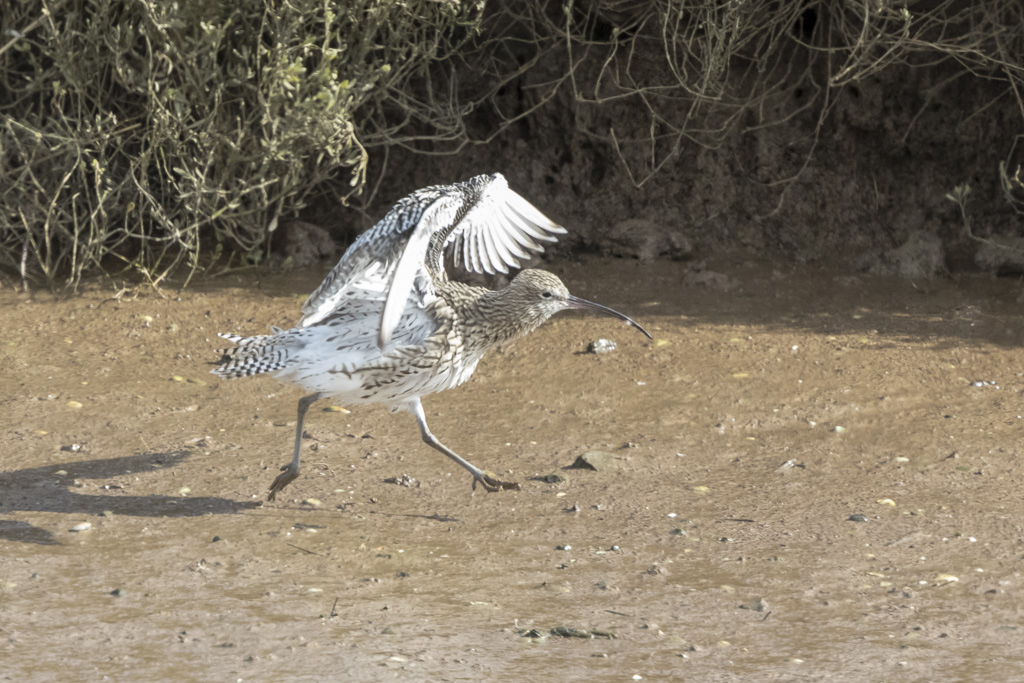
Curlews are supposed to be becoming more rare, but there were quite a few at Seaton, including this joyous individual taking a run along the mud.

But the best excitement was a Fox. I always get excited at the prospect of a Fox photo. When I first spotted it it was some way away. I feared it would not come any closer so I took a distant snap.


Sure enough, after it had looked in my direction for a while, it moved off away from me. But all was not lost! I have seen this Fox doing its rounds before so I focussed my attention on the Tram Lines, he often comes back that way. 

First sign that it was approaching was some calling Crows, then two rabbits quickly scampered down the bank to safety. Within seconds it came into view. A fine portrait!


I am gradually learning that success in wildlife photography depends a lot on being able to anticipate the subjects next move. Not always possible of course, but it sometimes makes the difference.

Please visit my main website at www.johncrabb.co.uk and follow my activities on www.facebook.com/johncrabbwildlifeimages

Thanks!
 

Tuesday, 9 February 2016

Exciting birds at RSPB Ham Wall

Note: All the photos in this particular Blog will expand for a closer view if you click them. Press ESC to get back to reading the Blog.

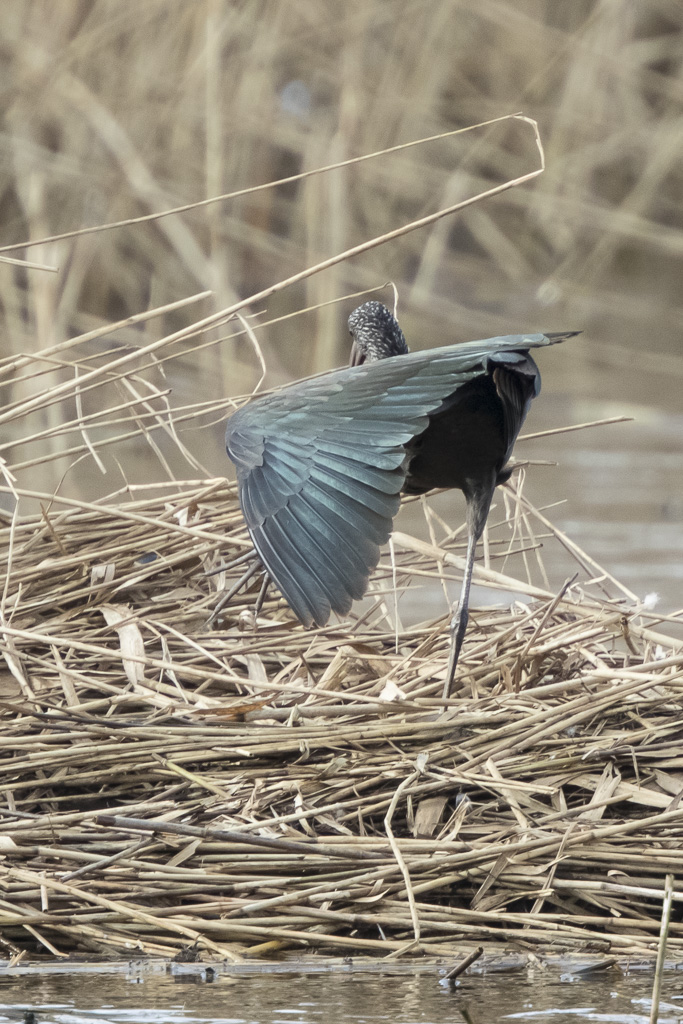
A great day at #RSPB Ham Wall last weekend! The Glossy Ibis that has been there for some time actually showed itself in front of one of the hides.


And to add to the excitement, a pair of Herons were starting to build a nest in front of the Tor View hide.


So, first to the Ibis. An elusive bird on most occasions, it chose a much more open location to feed during my visit. Sadly the sun was not shining during the time it was at its closest, but I managed to get some reasonable shots. Here are a few conventional poses, followed by some more unusual ones.

By the way, many of these shots were taken with the Canon 400mm f4 DO II plus 2x teleconverter. I am really pleased with them as I really would not have got anything without the converter. This confirms my opionion as expressed in my previous Blog on converters and image quality  http://johncrabbwildlifeimages.blogspot.co.uk/2015/07/do-lens-extenders-ruin-image-quality.html


And what does it think it is doing with this reed? Thinking of building a nest too, just like the Herons?


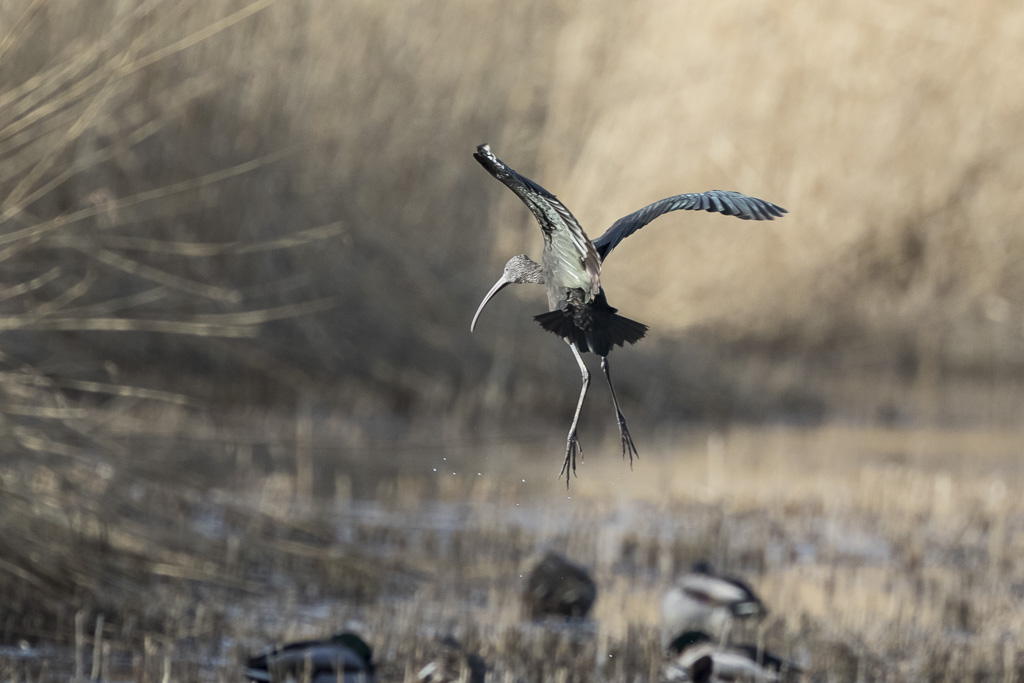
I did try to catch it in flight too, but annoyingly missed my best opportunity. I had been watching it closely for ages anticipating a take-off, but when it finally did my attention had been distracted by two new visitors to the hide - so I missed it! Quite a lot of silent cursing followed that. Anyway, here are some of the flight shots I did manage.


And so on to the Herons. Not normally considered a very exciting bird due to it being so common, but when you see them flying their displays during courting and nest building you really could not ask for anything more dramatic! For a start, they fly with their necks extended rather than neatly folded away.


I first spotted them in the reeds.

 
 Then witnessed them mating.


Obviously this did not go down too well with at least one of them!

  But they soon got over it and this next sequence shows the male (presumably) bringing a stick and its mate accepting it.


  Common birds, yes, but magnificent too!


All shots taken with the Canon 7D Mk2 (what a fantastic camera it is) and the Canon 400mm f4 DO II with teleconverters, usually the 1.4x, but also the 2x for distant shots.

Please visit my website at www.johncrabb.co.uk and "like" my page at www.facebook.com/johncrabbwildlifeimages 

Until next time!


Thursday, 4 February 2016

Even on a quiet day, there's always a bird photo to be had.

It's a funny thing but, even when I come back from a bird photography outing feeling that I have had a pretty blank day, there always seems to be something surprisingly interesting in the camera. I guess that this is all about pressing the shutter when your instincts whisper to you, and having an open mind when you come to review your shots on the computer afterwards. This quirky shot of a Cormorant on an ugly pole for example seemed to have more charm than I had thought when I took the shot.


The day started with me watching some Wigeon cruising the edge of a tidal creek at Seaton. Some other Wigeon were grazing on the island above them and it became apparent that the floating birds wanted to join them, only problem being a two foot bank to get over. After much consideration they did what they do best of course and decided to fly up and over. It was surprising what an obstacle they seemed to consider it. Here is a female on her way up.


Later more Wigeon flew in to join the happy band.


There was also a Curlew in attendance. Apparently Curlew are suffering a population decline so it is always nice to see one.


Even better when you can snap one in flight.


Then finally, after a drenching shower, these two Little Egrets came into land. I caught a rather pretty arrangement.


So, admittedly not a great day but not a write-off either. Just follow your instincts and see what you get. I am really looking forward to the Spring when all the bird activity increases, but in the meantime I will still go out and do what I can. After all, you can't beat a day out in the wilds.

Please visit www.johncrabb.co.uk and perhaps even "like" my Facebook page at www.facebook.com/johncrabbwildlifeimages


Sunday, 31 January 2016

I do like to be beside the ....

... Seaside of course!

Despairing of taking any new pictures during this unusually quiet period for inland birds, I visited the coast recently. I had previously noticed a small group of Fulmars (Fulmarus glacialis) taking up positions on the cliff ledges. Presumably these will become their nest sites.


Most casual observers would mistake them for Gulls but to me Fulmars are so much more interesting. They belong to the same family as Petrels and Albatrosses and are much more wedded to the open sea than most Gulls. Pelagic is the term. They do however have to come to the cliffs to breed.


After parking in the beach car park at Budleigh Salterton I struggled up the cliff path to try to re-locate the birds. Initially there was no sign of them. The wind was blowing along the cliffs rather than at them so there was not much of an updraught. Eventually I spotted one on a ledge and over the next twenty minutes or so witnessed them start to take to the air. Tricky wind conditions are no problem to a Fulmar.


If you have never seen them, here is what to watch out for. They look like medium sized Gulls, but are nearly always seen gliding on stiff, grey wings with hardly a wing beat. If they do beat their wings, it is most likely to be a short series of very shallow beats - more like a shiver than a wing beat.


A distinguishing feature are the two lighter patches about two thirds of the way along the wings. This sometimes does not show very well but you can usually make it out. Here are a couple of typical views of a Fulmar seen from the cliff tops.


The photography was not as easy as you might think. Although the birds were obliging and frequently wheeled and soared close to the cliff, even the Canon 7D Mk2 had trouble locking the autofocus on to them. The background of the ocean seemed to exert a powerful influence on the system and very often won out, leaving me with out-of-focus blobs where the bird should have been. For most of the time I was using the AF procedure previously outlined in my blog:

http://johncrabbwildlifeimages.blogspot.co.uk/2015/05/birds-in-flight-with-canon-7d-mkii.html

This worked quite well, but I experimented with using just the expanded centre point rather than all 65 AF points. I felt that this locked on to the birds better under these circumstances, but I cannot prove it. The additional difficulty was the extreme mobility of these birds as the South Westerly wind steadily freshened as the afternoon progressed. It was difficult to get them in the view finder - especially when they came very close. Eventually I decided to abandone my 1.4x teleconverter and just use the bare 400mm lens to get a wider field of view.


In the closer photos you can just make out a very characteristic feature, the peculiar tube-like nostrils of these birds. They actually belong to a group of birds called "tube noses" - this is the same group mentioned above and includes Albatrosses and Petrels. Here is a close up of the arrangement.


So that was an exhilerating afternoon. After taking almost 400 shots over a period of nearly three hours I was getting cold! The first few spots of rain had me packing up and making my way back to the lowlands. Here are a few more shots to finish.


 Please do visit my web site

www.johncrabb.co.uk

and perhaps "like" me on Facebook www.facebook.com/johncrabbwildlifeimages