Showing posts with label bittern. Show all posts

Saturday, 14 November 2015

Winter on the Marshes


When I start to get wildfowl pictures like these I know that Winter is well on its way.


The temperature is a bit of a giveaway too. I came home after a day at RSPB Ham Wall feeling pretty chilled and resolved to wear more layers next time. It was the wind as much as the temperature which contrived to rob my body of its essential heat. Was it worth it? Yes, as always!

Below is a Gadwall landing on a crowded patch of water.


And this Shoveler positively glowed in the afternoon sun. 


Geese always make me think of Winter too. In this case it was just some Canada Geese that came noisily honking in to land. 


Won't be long before the Whooper Swans arrive. Sadly, this was just a Mute Swan, but one day it will be the real thing!


The funny thing was that, even though Winter is just starting, there were already signs of Spring behaviour amongst the birds. The Mallards below were seen mating. This photo catches them just after the male's head-bobbing display has caused the female to adopt a prone, submissive posture prior to mating.


These Herons were also engaging in a playful aerial game very reminiscent of Spring.


Even the Coots were making a playful splash.


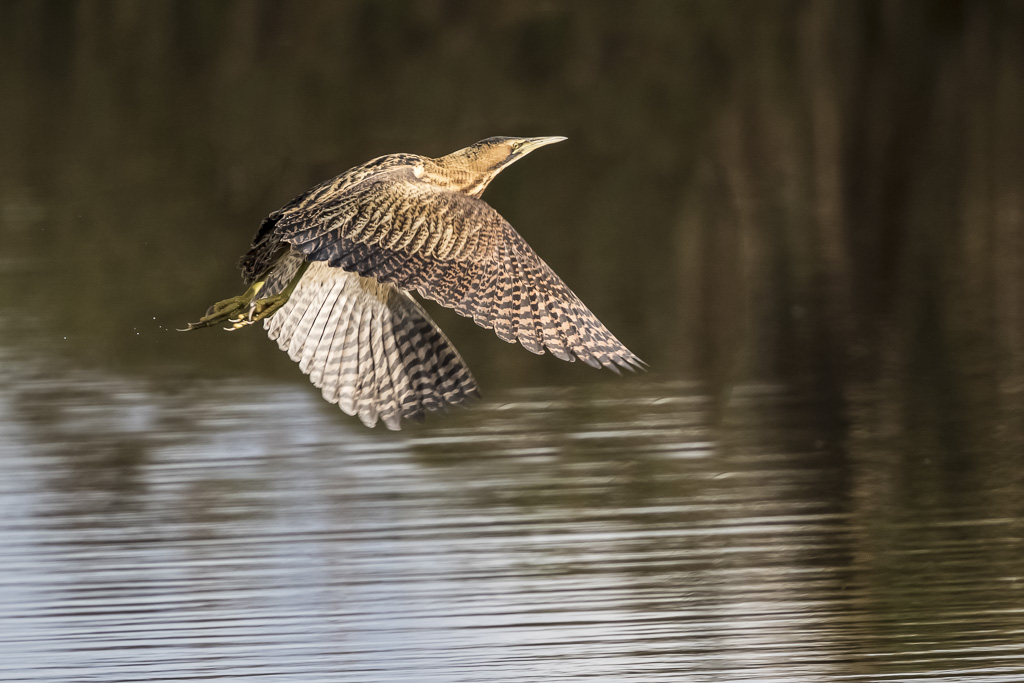
Of course the Bitterns were still very much in evidence. It is very difficult to photograph them at this time of year. They only make very brief flights and it is difficult to get on to them. Once they catch Spring fever it will be easier as they chase each other about the sky for extended periods.


Marsh Harriers as well of course. I often wonder how they survive. I watch them hunting for extended periods and imagine their growing hunger pangs. They never seem to catch anything and I fear that they will not survive the night.


This is a typical sighting with the bird fluttering over the reed tops whilst staring intently downwards


Marsh Harriers always seem to keep so far away from the hides. I often kick myself afterwards for not fitting my 2x teleconverter. Never seem to think of it in time. I am always hoping instead that this time they might come nearer.


Here is one with Glastonbury Tor in the background.


Finally, this fine Cormorant posed for me.


And this Grey Heron cruised by in the low winter sunlight.


Thanks for reading this far. Much more stuff on my site at www.johncrabb.co.uk and on my Facebook page at www.facebook.com/johncrabbwildlifeimages


Monday, 26 October 2015

Birds in Flight - Bittern Bonanza!

Well, this is where I ended up by the end of the day ...


... but the visit to RSPB Ham Wall started off quite differently.

Note that any of the photos in this particular Blog will get bigger if you click on them.

In fact nothing much was happening. Just an atmospheric shot of a female Marsh Harrier floating against the background of Glastonbury Tor.


 And then a bit nearer:


Then there was the episode with the Little Grebe catching a fish, and eating it.


I had never seen that before. I thought that they caught much smaller animals, but this one had relatively little problem with that sizeable Perch.

Walking on, I came to an aerial tussle between a Crow and a Buzzard.


But the real excitement only started once I had settled in the Tor View hide. For a while, nothing. But then I spotted a Bittern that had come to the edge of the reed bed. It was standing on some reed stems that it had bent over. You can just make it out in this shot.


I alerted the other three or four photographers in the hide and we did our best. What we were all waiting for of course was for it to take off and fly to the other side of the water channel, something I had seen Bitterns do before at that spot.


For all the clatter of camera shutters, very few good shots were obtained. It is just so difficult to keep the bird in view at that relatively close range. The shot above was probably one of the better ones.

Normally, that would have been that for the rest of the afternoon. Bitterns usually just stay put. But this one was obviously not happy. For fifteen minutes or so I heard it growling and grumbling to itself from the depth of the reeds. I just knew it was going to fly out again, so I trained my lens on the reed face and waited. Sure enough, it eventually took flight and I was prepared for it. I got this rather spectacular series of shots.


Needless to say perhaps, I was over the moon with them. You should see the originals! The Canon 7D Mk2 autofocus was set up exactly as described in one of my other Blogs at

http://johncrabbwildlifeimages.blogspot.co.uk/2015/05/birds-in-flight-with-canon-7d-mkii.html

So it all just goes to show that you have to keep faith. Even if nothing is happening, keep calm and patient. One day you will get a stroke of luck! Guaranteed!

Please visit my website at www.johncrabb.co.uk and look up my Facebook page (and perhaps even "like" it) www.facebook.com/johncrabbwildlifeimages


Friday, 28 August 2015

Birds of the Reed Beds start to Stir

After several weeks of almost total inactivity at #RSPB Ham Wall, some signs of life yesterday! The Great Egrets were making occasional flights. This one ended up by landing in the reeds right in front of me. Here is a sequence of three shots as it approaches.


I just love it when I get lucky like this, especially if, as yesterday, I am waiting for hours and hours for anything to happen. It is a shame that you cannot see the originals of these shots. My new birds-in-flight combination of the Canon 400mm f4 DO II lens and the Canon 7D MkII camera is proving to be a killer combo! I always use it with the Canon 1.4x teleconverter and it is still light enough to carry around all day even if I am walking miles.

Having replaced the original version of the 400mm f4 DO with the recently-released MkII I am mightily impressed by the increased sharpness that I am getting. I read all the bad comments about the original lens but nevertheless generally seemed to get good results with it. I used it on the original 7D for about four years. The new lens however is a class above the original.

Of course, it takes time to come to a conclusion like that, especially with birds in flight. By the very nature of the activity quite a lot of the photos come out blurred to one degree or another, even with the best technology to help you. So you have to look at the good shots you eventually get and compare them with what you used to regard as good with the previous equipment. When I do that I am seeing levels of sharpness that I do not think I have ever really achieved before.

Sadly, even small improvements in quality come at very high financial cost. The Canon 400mm f4 II is not cheap, but I could not be without it. It was impossible for me to continue with the old one knowing that there was a better one out there. I just could not rest easy. Here is a nice sharp Grey Heron.


These shots are all the more amazing if you know what chaos reigns behind the camera when a bird suddenly shows after hours of nothing happening. Suddenly I am trying to do everything at once. Even getting the bird in the viewfinder is not easy. I just press the button and the technology then does the rest, focus and exposure. I am often amazed to see what it has managed to come up with!

Whilst we are talking Herons, here is an earlier shot taken in the winter whilst this one was fishing.


The reeds are their winter colour. I won't be long now before they start to turn from Summer green. Here is a distant shot of a Great Egret doing a bit of fishing too.


The other bird that put in occasional appearance yesterday was the Bittern.


At this time of year they just pop up out of the reeds, fly for about twenty seconds, then drop out of sight for the rest of the day. It is so frustrating as they almost always take me by complete surprise and I cannot even get the camera on to them. The one above though made the mistake of making a slightly longer flight and passing right in front of the hide. Even I had a chance.

Another bird which is usually easier to photograph is the Mute Swan. Trouble is, they almost always look pretty much the same floating along, so I was quite grateful to be able to snap this more interesting pose.


Obviously having a good stretch prior to doing something energetic, like paddling serenely along.

Finally a nice shot of Glastonbury Tor to remind us all that Ham Wall is in Somerset!


Actually, not quite the last shot as I would like you to know that I also got several distant Marsh Harrier sightings during the day.


Please do visit my website at www.johncrabb.co.uk and perhaps "Like" my Facebook page at www.facebook.com/johncrabbwildlifeimages 

Thanks!!


Thursday, 16 July 2015

More from the marsh!

I had always thought of summer as the quiet period for bird watching and photography. Not this year though!


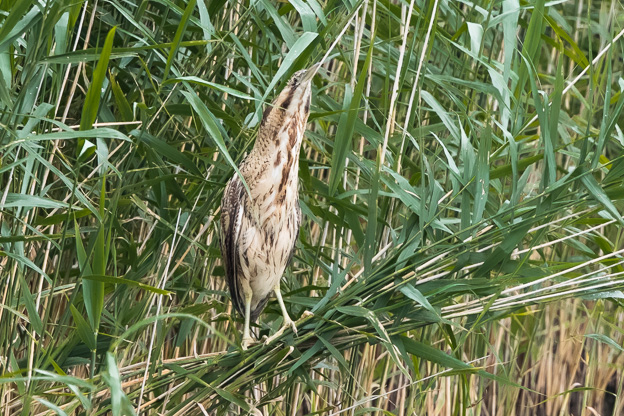
Having spent much of my last Blog entry moaning about missing the best of the bird action, I happened to be in the right place when this Bittern came out of the edge of the reed bed to have a look at the world. I think it may be a young one. As I watched, it looked like it might be about to launch into the air, but each time thought better of it and crept back into the cover of the reeds. It did do a bit of posing though, including an attempt at adopting the famous vertical-neck posture to blend in better with the reeds - it is actually known as "bitterning" apparently.


Just in passing, I must mention that my new Canon EF 400mm f4 DO II is giving me some astonishingly sharp photos. This bird was a good 40 or 50 metres away, but cropping in more tightly to these already cropped photos shows how sharp the bird was. That is with a 1.4x converter too. I do not think that the original DO lens would have performed as well.


Apart from this very obliging bird, there were other bitterns on the wing from time to time. It is easy to miss them as they usually make no noise to announce their presence, and the first thing you notice is them gliding silently by too late to raise the camera. Got this one though.


Although the marsh at Ham Wall seemed quiet, a little patience paid off. Here a Swan is taking exception to the insistent presence of a Cormorant.


It ended up giving it a good hissing to! The Cormorant was not bothered. Here it is making a bit of a splash to show its disdain.

 
Here in Somerset we are still lucky to be seeing Great Egrets every day. A fabulous sight and I am still very keen to photograph them. This one was calling as it erupted from the reed bed.


I am also always on the look out for those other charismatic birds of the wetlands, Marsh Harriers. They seldom come close enough for a good shot, but these are not bad.


At the other end of the size range is this Reed Warbler, although you would be forgiven for not recognising it. It has lost most of its head feathers and looks distinctly weird!


I once saw a photo of a Robin looking like this and it was perched on a sign which read "Queue here for sympathy." I have no idea if this was genuine or not, but it was very apt.

You will also have noticed that there are no Barn Owls in this post. I think the obliging day-flying individual that has featured in the last few posts has become nocturnal or moved away. Here it is taking a dubious look at the daylight and deciding it would go back to bed.


Don't be shy about visiting my website www.johncrabb.co.uk I could also do with a few more people "liking" and "sharing" my Facebook page www.facebook.com/johncrabbwildlifeimages
Thanks!

Here is a post from my Facebook page that you may have missed.

I caught this Cormorant eating its lunch at #RSPB Ham Wall. You can read the whole story about this and a selection of...

Posted by John Crabb Wildlife Images on Wednesday, July 8, 2015